Balinese teak, suar, and rattan furniture is shipped to homes and hotels on every continent. Getting it there intact takes more than loading a container — it takes the right preparation, the right paperwork, and a realistic schedule.
1. Dry and Inspect the Cargo
Solid wood must be properly kiln-dried or air-dried before packing. A sealed container crossing the equator behaves like a greenhouse: trapped moisture condenses on the walls and drips back onto your cargo, causing mould and swelling during a four to six week transit.
What we check before packing: moisture content, finish curing, loose joints, and any metal fittings that could rust in transit.
2. Fumigation and Phytosanitary Treatment
Wooden items and wooden packaging must meet the ISPM-15 international standard. Australia and New Zealand apply the strictest biosecurity inspections, and an untreated shipment can be held, re-fumigated at your cost, or destroyed at the border.
We arrange the fumigation, quarantine inspection, and treatment certificate on your behalf, so the documents travel with the cargo rather than chasing it.
3. Export-Standard Packing
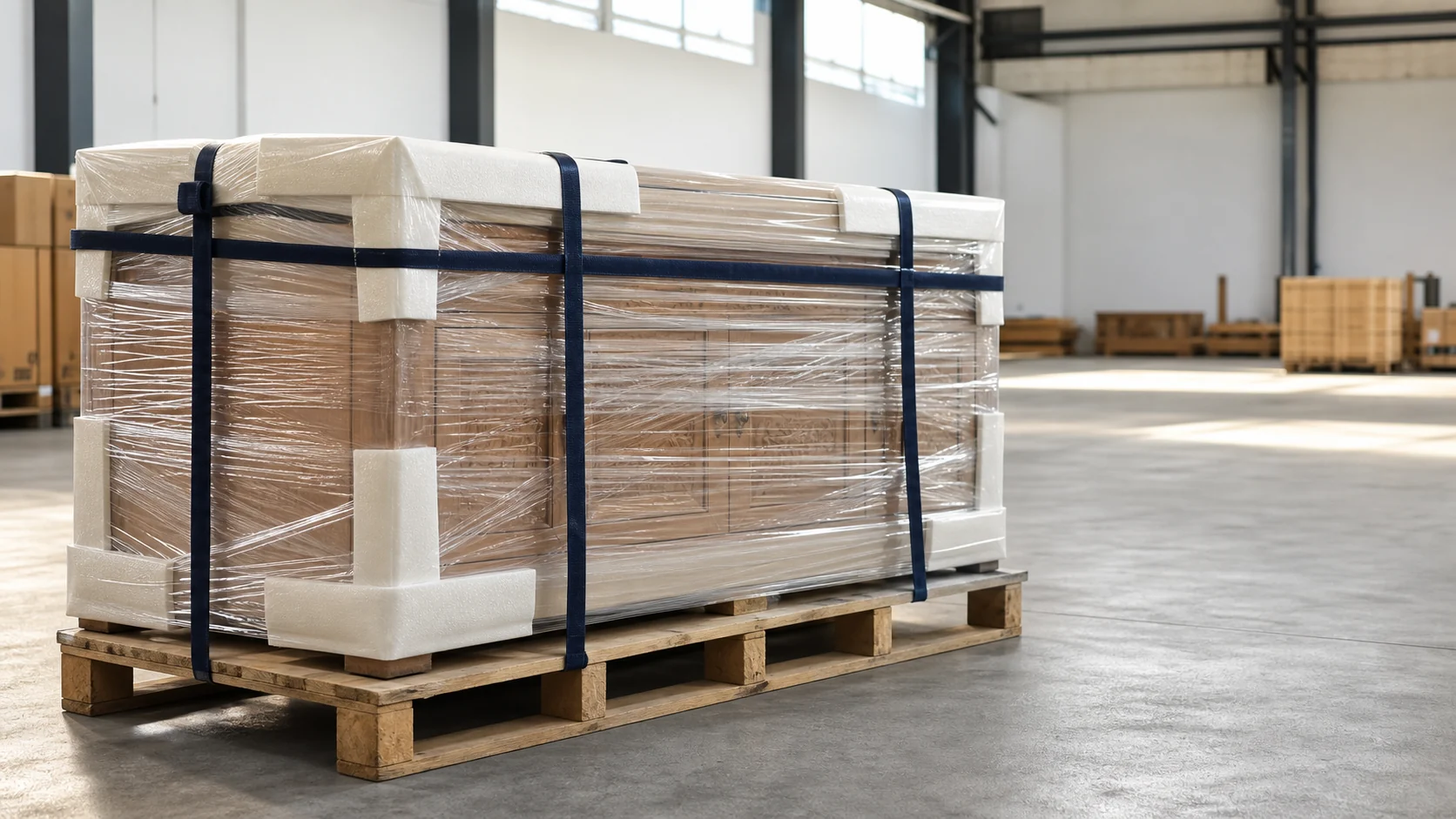
- Soft padding and corner protection on every finished surface
- Shrink wrap as a moisture barrier, not as structural support
- Custom plywood or timber crates for carved, glass, or marble-topped pieces
- Palletising and strapping so nothing shifts when the container rolls
4. Choose FCL or LCL
A full container (FCL) is usually more economical above roughly 15 cubic metres, and it means your cargo is never handled at a consolidation warehouse. Below that volume, our weekly shared-container consolidation (LCL) to Australia and Europe is normally the cheaper route.
If you are shipping a single dining set, LCL is almost always right. If you are filling a villa or a retail order, ask us to price both.
5. Prepare the Documents
- Commercial invoice and packing list
- Certificate of origin (Form E, Form AK, or general, depending on destination)
- Fumigation and phytosanitary certificates
- Export declaration (PEB) and bill of lading
Typical Timeline
Southeast Asia runs 7–14 business days. Australia is usually 14–21. Europe, the United States, and Canada typically take 30–45 business days door to door, depending on the sailing schedule and destination customs.
Send us your item list, dimensions, and destination address and we will come back with a transparent quotation and a realistic sailing date.