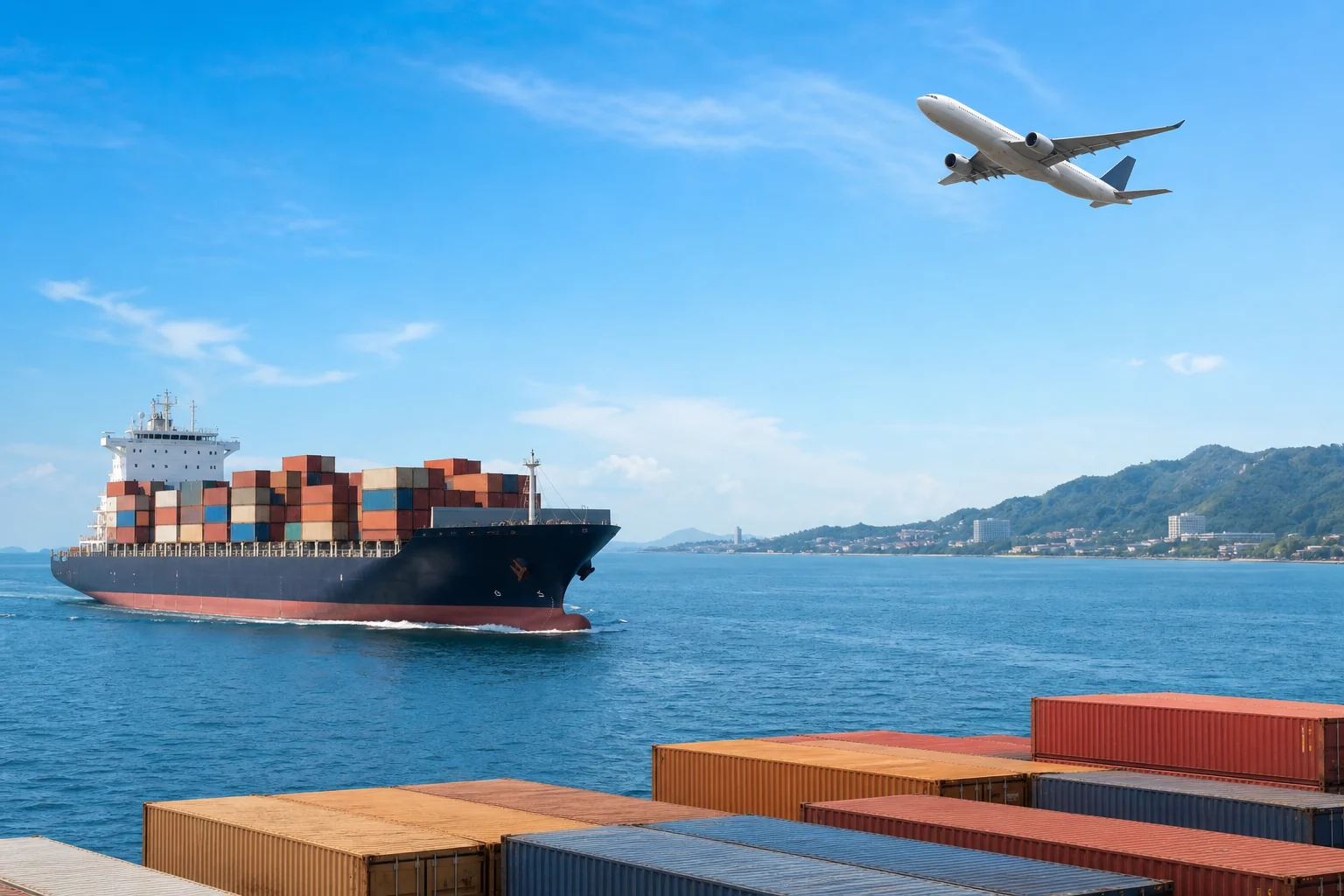
Air freight is faster. Sea freight is cheaper. That much is obvious — but the crossover point is not where most people assume, and choosing wrong costs either weeks or a lot of money.
The Short Version
- Under about 100 kg and urgent: air freight is usually justified
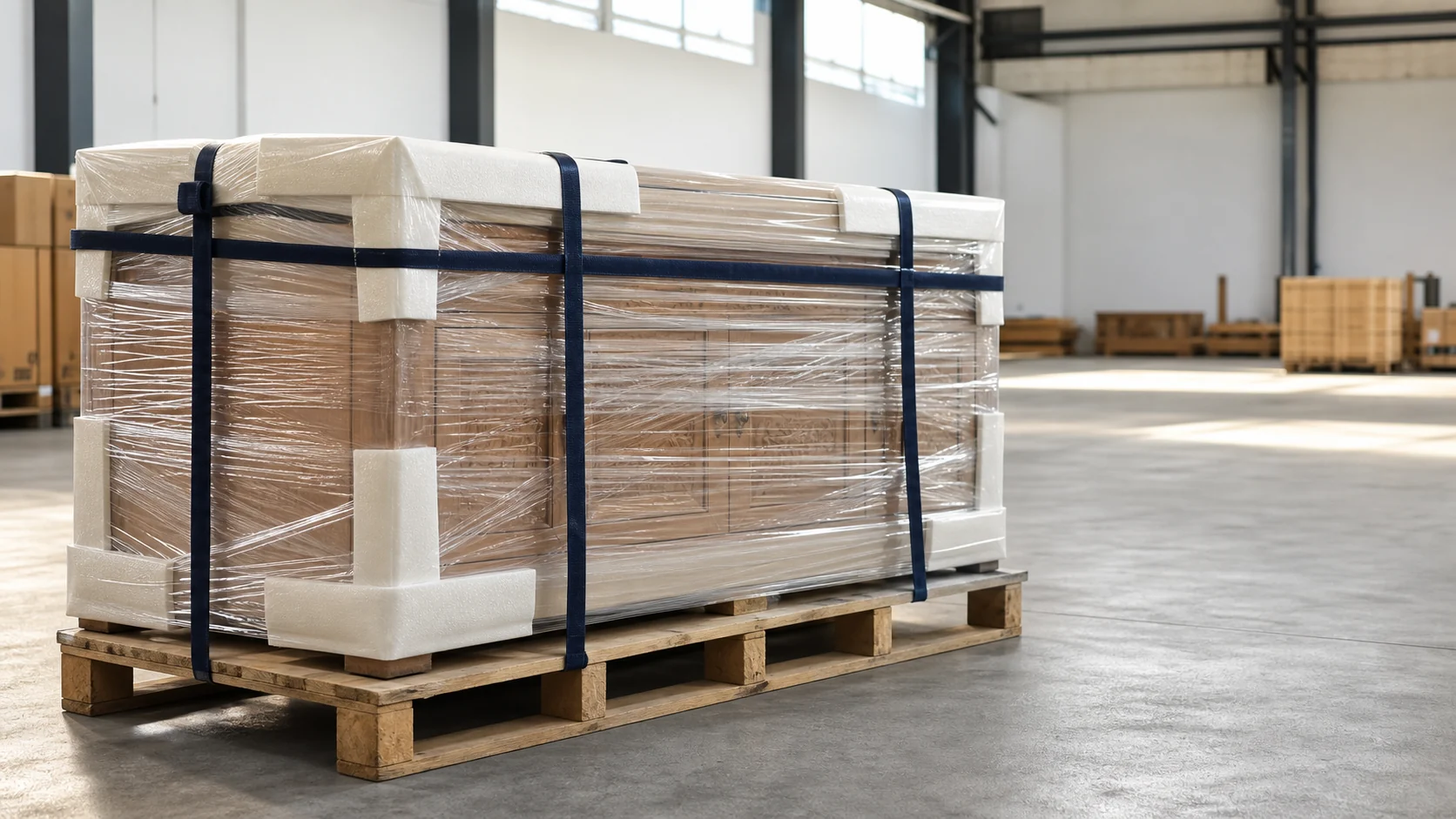
- Furniture, stone, and bulk handicrafts: sea freight, almost always
- Samples, documents, and replacement parts: air freight
- Anything over roughly 2 cubic metres with no deadline: sea freight
How the Pricing Actually Works
Air freight is charged on chargeable weight — the greater of actual weight and volumetric weight. Balinese handicrafts are typically light but bulky, which means volumetric weight dominates and air freight gets expensive fast.
Sea freight is charged by volume for LCL (per cubic metre) or by container for FCL. Once you pass roughly 15 cubic metres, a full container usually beats paying per cubic metre.
Transit Times from Bali
- Air freight: 3–7 business days to most destinations
- Sea freight to Southeast Asia: 7–14 business days
- Sea freight to Australia: 14–21 business days
- Sea freight to Europe, US, and Canada: 30–45 business days
What Else to Weigh
Air cargo is handled more times but spends far less time exposed to humidity and temperature swings. Sea cargo sits in a sealed steel box for weeks, which is why packing and moisture control matter much more on an ocean shipment.
A common pattern: send the samples by air to close the order, then move the production run by sea.
Still Not Sure?
Send us the dimensions, weight, and your deadline. We will quote both options side by side so you can see the real difference rather than guessing at it.